Case Study
Estonia
Before Sera I sent 100 emails & got 0 replies
What do you do when 100 cold emails get zero replies? Former bank executive Rasmus Heinla handed customer prospecting at wooden packaging maker Timbra to Sera AI — and landed a fast-growing glass manufacturer. Discover how warmth, quality, and being visible at the right moment beat competing on price.
S
Sera Editorial
Case study

Timbra
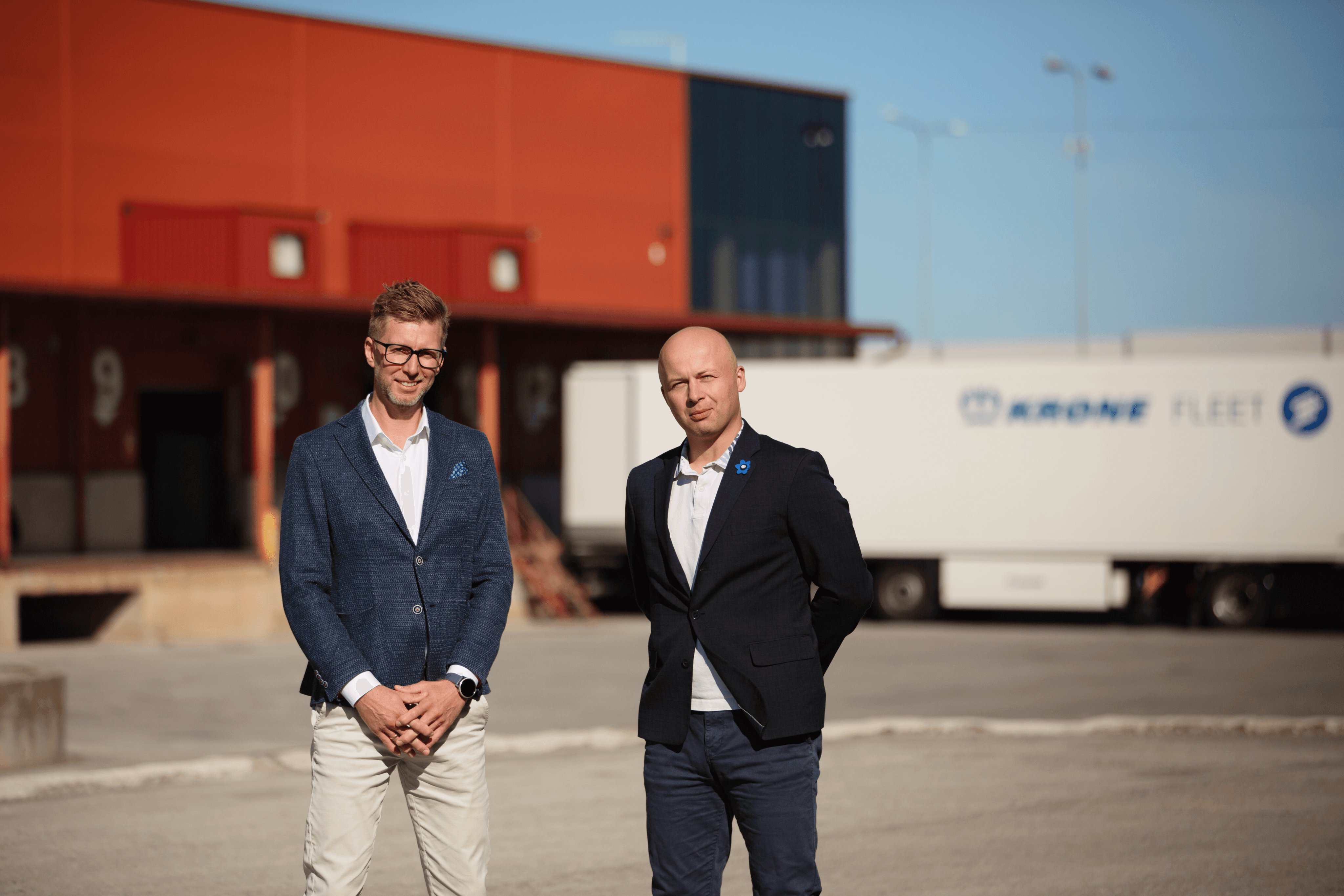
Rasmus Heinla sent out more than a hundred sales emails. Not a single one got a reply.
"My hypothesis is that they went to info@ addresses and got stuck in some admin's junk folder. I didn't send follow-ups, and the message in my email wasn't interesting enough," he recalls of the time he tried to find new customers himself for Timbra, a wooden packaging manufacturer.
Today, that work is done for him by Sera, an AI-powered sales agent. And it has already delivered a result Heinla couldn't achieve on his own: a new customer, a fast-growing glass manufacturer near the Estonian town of Keila, where Timbra is based.
"Sera helped us make the first contact. From there, it took about one and a half to two months of getting acquainted, because they already had existing suppliers," Heinla says. The breakthrough came when Timbra took an unconventional step: the team built a sample product, drove it to the customer, and handed it over in person. "We quite literally drove up to their gate with a sample product and presented it ceremonially. Maybe two days later, we shook hands on the deal."
The Banker Who Bought a Woodshop for the Price of Its Equipment
Heinla arrived in the timber industry by an unusual route. Before taking the wheel at Timbra, he spent nearly 15 years in the financial sector, the last seven of them helping build the Estonian bank Coop Pank. He had no experience in the timber industry whatsoever.
That, he believes, is exactly his strength. "I don't see much difference between running a bank, a pharmaceutical plant, or a small woodshop. The same management principles apply everywhere," he says.
Heinla describes Timbra's story as something of a Cinderella tale: when the previous owners wanted to exit the business, the company was bought essentially at the price of its equipment. Production was running, there were loyal customers, and the finances were in order. It was clear that far greater potential lay hidden here, waiting to be unlocked by systematic sales work.
Heinla is not the company's only owner. The other owner, Erkki, takes care of production, while Heinla leads everything else. "Without Erkki, Timbra wouldn't exist today," he says. "We trust each other completely and don't micromanage. I have essentially none of the competencies needed to do Erkki's job."
When Not Competing Pays Off
According to Heinla, the local timber industry has plenty of strong companies that compete on price, but their approach to the customer leaves room for improvement. "The more old-school the business, the more potential I see for a fast leap," he says.
From the start, Timbra decided not to compete on price alone. The market is full of cheap suppliers, so Timbra chose to focus on quality, personal attention to the customer, and a willingness to go the extra mile. One example: Timbra keeps a stock of its customers' materials in its own warehouse. For the company, that means risk, with money tied up in inventory. For the customer, it means certainty: when something is needed from the warehouse fast, it can be delivered fast.
"Our hypothesis is that no one can deliver as quickly as we can," Heinla says.
Browsing competitors' websites, Heinla noticed the same signature everywhere: dark tones, formality, and drone shots of vast warehouses. "Wood radiates warmth by nature. We want that reflected in all of our communication: warm and close. We want to send the signal that this company genuinely cares," he describes.
Customers often don't know exactly what kind of packaging they need. They have a product and are looking for a partner who can help decide how to transport it safely. "The customer isn't a packaging expert. They're an expert on their own product. Our job is to help get that product packaged right," Heinla says.
Where Traditional Sales Failed, Sera Worked
Heinla's first attempt to find new customers by hand was a failure. That made him skeptical about Sera's AI as well. Reality proved otherwise.
Sera's AI agent finds manufacturers that need wooden packaging for their products and sends them an introductory email. The email reads as if written by a human, with a hook designed to make interested customers reply. Simply put, Sera gets a foot in the door, and people take over the conversation from there.
"Today, Sera is a fully fledged part of our sales process," Heinla says. Sera performs two crucial functions: it removes a large share of the manual work, and it makes it possible to quickly test different messages, target audiences, and value propositions.
In B2B sales, Heinla adds, it's naive to expect a reply to the first or second email. What matters most is being visible at the right moment. "I never know in advance when a customer's relationship with their existing partner will start to falter. But I need to be visible to catch that moment." That, he says, is one of Sera's greatest advantages.
Next Step: Exports
Timbra isn't chasing growth at any cost. "I'd rather build something I genuinely enjoy than squeeze water from a stone," Heinla says. But the company has ambition. This year's goal is to land the first export customer, primarily in the Nordics. "Today we don't have a single foreign customer. If we manage to win even one, it will be a major milestone for us."
In his view, the biggest changes from artificial intelligence won't come to technology companies, but to traditional sectors where much of the work is still done by hand. Put the right tools, clear positioning, and a human sales style together, and even a small industrial company can become visible in the market in a short time.
Sera AI is a Baltic-built sales agent that helps B2B companies find the right contacts at the right moment across sectors, markets, and roles. Timbra uses Sera to build a systematic sales process, test new messaging, and reach the right people without anyone having to hunt for customers manually. Getting started requires no IT development, and you can begin for free → seraleads.com
Six AI agents that find and open new B2B contacts
See how Sera fills the top of the funnel for lean teams.
Book a demo

S