Comparison
2026 Guide to ZoomInfo, Apollo, UpLead, Lusha, Sales Navigator & Hunter.io
The end of “just buying data” - and the rise of autonomous AI sales teams.
Spending hours Googling things like "ZoomInfo alternatives," "Apollo vs Lusha," or "find email address B2B"?
You're not alone.
For years, the outbound playbook has been: buy quality data → upload to sequencer → blast emails. It worked well enough to justify the spend.
Then the internet changed the rules. 🛑
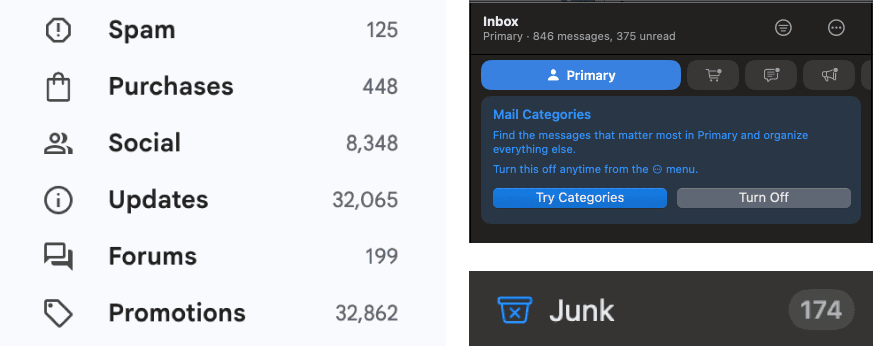
Between Gmail and Yahoo's bulk sender requirements (Feb 2024) and Microsoft's new standards (May 2025), high-volume, low-relevance email sequences are now actively punished by inbox providers.
So in 2026, the question isn't just "Which B2B database should I buy?"
It's "Who's actually doing the work to reach the right people, at the right time, without wrecking our domains?" 🤔
This guide walks through the big 6 B2B data & email finder tools — UpLead, Lusha, ZoomInfo, Apollo.io, LinkedIn Sales Navigator, and Hunter.io — and introduces a different category entirely:
Not another tool.
A small outreach team of 6 AI agents + human support that does the outbound work for you.
Let's dig in. 👇
TL;DR – Who each tool is really for
Quick map before the deep dive:
🟢 Sera AI – Best for end-to-end sales outreach for 2026
A team of 6 AI agents (+ human support) that finds accounts, gathers data (accessing more than 1B+ contacts from 300M+ companies), enriches, researches, writes, and sends low-volume, high-quality emails for you. Built for busy teams who care about the results and not manually setting up every part of the outreach just for the love of the game.
Apollo.io – Best legacy all-in-one for teams who love settings
Combines a big B2B contact database with sequences and tracking in one UI. Great if you want to run your own "list + sequence" motion and have someone who enjoys setting it up. Gets expensive over time and scale.
UpLead – Best for clean data if you're building your own system
Real-time verified B2B database with strong email verification. Good if your priority is bounce rate and you're happy stitching together the rest of your outbound stack yourself.
Lusha – Best for quick "find email + phone" if you live on LinkedIn
Chrome extension + B2B data with a credit-based model. Great for individual reps who love clicking "Reveal" — just know it gets manual (and pricey) at scale.
ZoomInfo – Best for enterprises who can expense anything
Huge database, firmographics, org charts, intent data, with $10k+/year contracts and add-ons. Powerful if you have the budget and a RevOps team to make sense of it all.
LinkedIn Sales Navigator – Best B2B research map (but just the map)
Advanced filters, lists, lead recommendations. Perfect for finding people — just don't expect it to actually help you email them.
Hunter.io – Best "utility knife" if you need one specific thing
Domain search, email finder, and verification. Ideal as a supporting tool to clean lists and protect deliverability (not a full outbound system).
Why "List + Sequence" is dying in 2026
If you're ended up here as researching ZoomInfo alternatives or comparing Apollo vs Lusha, you're probably still running some version of this workflow:
Buy a B2B business data tool (ZoomInfo, UpLead, Lusha...)
Export contacts, enrich, verify
Drop them into Apollo or another sequencer
Cross your fingers and send
It used to work, at least enough to justify the tools.
Then inboxes fought back. 📧⚔️
Gmail and Yahoo now require bulk senders to properly authenticate, keep spam complaints below strict thresholds, and provide one-click unsubscribes - with enforcement ramping since February 2024. Microsoft announced similar rules effective May 5th, 2025, for high-volume senders to Outlook, Hotmail, and Live accounts, including proper SPF, DKIM, and DMARC authentication or they'll route you to junk or reject outright.
At the same time, AI made it trivial for anyone to:
Generate thousands of "personalized" cold emails
Plug them into tools like Apollo and Sales Navigator
Hammer every inbox within a niche
Result: more noise, less trust, stricter filters.
Sera's team tested 33 sales tools with AI features and saw the same pattern: most products made it easier to send more, not better, and rewarded volume over thought.
So the 2026 thesis is simple:
The winners won't be the teams with the biggest lists.
They'll be the teams with the best pre-research operators (human, AI, or both).
The old sales tool stack sells or rents you gardening tools.
The new stack gives you a gardening crew.
Top 7 B2B Data Providers & Alternatives
We'll start with the AI agent workforce (like Sera AI), then walk through the classic tools it often replaces or complements.
1. ✨ Sera AI – B2B sales outreach Autopilot
Sera is what you get if you stop asking:
"Which tools should I use to do effective sales outreach?"
and start asking:
"How can I get new leads in? Is there outbound team with AI-powers?"
Instead of selling you yet another "AI sales engagement platform," Sera runs B2B sales outreach from start to finish with a team - six specialized AI agents working together as one autopilot - trained on the best human outbound experts.
Those six agents:
List Building Agent – sources verified companies and decision-makers from 300M+ companies and 1B+ professionals based on your ICP. You get tight, relevant lists, not CSV bloat.
Enrichment Engine – layers in firmographics, tech stack, revenue, industry and more so every row has context.
Research Analyst – scans the web, LinkedIn and news for signals like funding, hiring, launches, and strategic shifts, then turns those into angles for outreach.
Decision-Maker Identifier – finds the person who can actually say yes (or become your champion), instead of spamming an entire department.
Deliverability Guard – handles domain warm-up, address validation and sending patterns to keep deliverability high (ca 99%) under the new bulk sender rules.
Outreach Writer – writes short, specific, multilingual emails that read like a human did their homework, because it pulls from everything the other agents found.
And behind those agents you still get the Sera team (real humans who help you onboard, show around, define your ICP and help when you run into troubles, and make sure the agents behave like a seasoned outbound squad, not an over-eager spam cannon).
In gardening terms: 🧑🌾
UpLead, Lusha, ZoomInfo, Apollo, Sales Nav and Hunter.io are your rake, shovel, hose, map and scissors.
Sera is the crew that turns up with their own tools, plants the right seeds, tends the soil, and comes back when it's time to harvest. 🌱
Pros
End-to-end: from pre-research, targeting to contacting new clients (not just "here's your data")
Low-volume, high-relevance by design, aligned with 2026 inbox rules
No tool-juggling: you monitor outcomes, not credit dashboards
Human safety net: real people behind the agents if something breaks or you need someone to consult
Huge access: 1B+ professionals from 300M+ companies, best coverage in Europe, US, UK and CA
100% Autopilot: sales outreach 24/7 - our team monitors and the team of 6 agents do the work
Cons
If you prefer manual control over every send, giving the agents autonomy can feel scary at first
Built for teams who want outcomes over vanity metrics; if your KPI is "emails sent," it will feel "too careful" by design
Best for
Teams who are tired of:
Comparing pricing pages for tools they'll still have to operate themselves
Paying for 5 different platforms that don't talk to each other
Hiring someone whose full-time job is "make the stack work"
...and would rather just say:
"Here's our ICP. Please go find them, research them, email them, and don't destroy our sending reputation."
Deploy the team of Sera AI agents →

2. Apollo.io – The Volume Legacy
Apollo.io is the flagship all-in-one tool of the 2020–2024 era: a big B2B contact database, plus email sequences, dialer, analytics and integrations.
You can:
Search millions of contacts with 200+ filters
Find email addresses and phone numbers
Drop leads into multistep sequences from the same UI
Pricing is tiered (Free, then paid plans like Basic, Professional, Organization) with per-user fees and credits for data usage.
Pros
All-in-one cockpit for many small teams
Affordable entry for startups vs enterprise tools like ZoomInfo
Lots of knobs to turn: A/B tests, triggers, rules
2026 Risk
Apollo makes it extremely easy to ramp up volume, exactly what Gmail, Yahoo, and Microsoft are watching more closely in 2026.
You still need a skilled operator to set sending limits, avoid bad data, and keep sequences from becoming "spam with a first name merge tag"
If your team is busy, default behavior tends to be: "just crank the volume"
Best for
DIY growth teams with a dedicated ops person who loves this stuff
Startups that want a single platform and don't mind becoming Apollo power users
3. UpLead – The Accuracy Niche
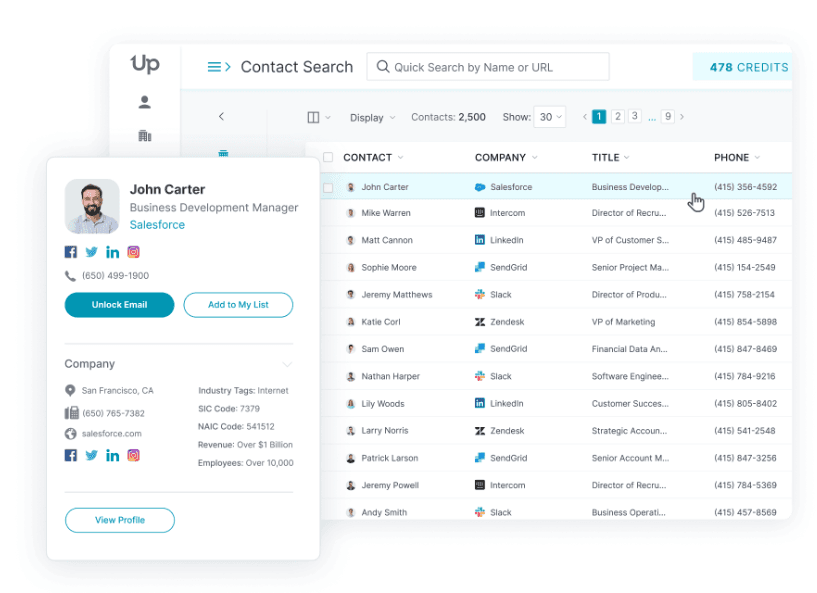
UpLead is a B2B contact & company data provider that leans hard into real-time verification and data quality.
Highlights:
180M+ contacts, 50+ filters, real-time email verification
Firmographic and technographic data, plus enrichment APIs
Clear, tiered pricing (Essentials, Plus, Professional) with free trial
Pros
Excellent if your primary KPI is bounce rate
Transparent UpLead pricing — you know your spend before talking to sales
Clean enrichment to feed whatever sequencer you use
Cons
It remains a database, not a program
You still need a human to define ICP and filters, build lists, and orchestrate sequences and deliverability
Best for
Teams that want to own every piece of the stack and are obsessed with clean, accurate B2B business data. (You still need to build the outreach part yourself.)
4. Lusha – Powerhouse with a Plugin
Lusha is a full B2B sales intelligence platform that sits where sales reps work and feeds them direct dials, emails and company data in real time.
It's a B2B contact data platform with:
A popular Chrome extension that reveals email & phone on LinkedIn/company sites
A web app for bulk prospecting and enrichment
Integrations into Salesforce, HubSpot and more
Pricing is the classic seat + credits model:
Free tier with limited monthly credits
Paid plans (Pro, Premium, Scale) with more seats, credits and features. Can get expensive when growing
Pros
With plugin, super low friction: click "Reveal" and you find the email address
Great for SDRs
Simple learning curve
Cons
Clicking "Reveal" in plugin for hours is... a lot of manual labor in an AI-first world (and kind of soul-crushing?)
Credit-based Lusha pricing gets painful as you scale across a whole team
Still needs a separate system for research, deliverability and actually sending outreach
Best for
The SDRs who enjoy the plugin practically live on LinkedIn and wants a sharp browser extension for ad-hoc prospecting.
5. ZoomInfo – The Enterprise Legacy
ZoomInfo is the SUV of B2B data platforms: large, powerful, and priced like it.
It offers:
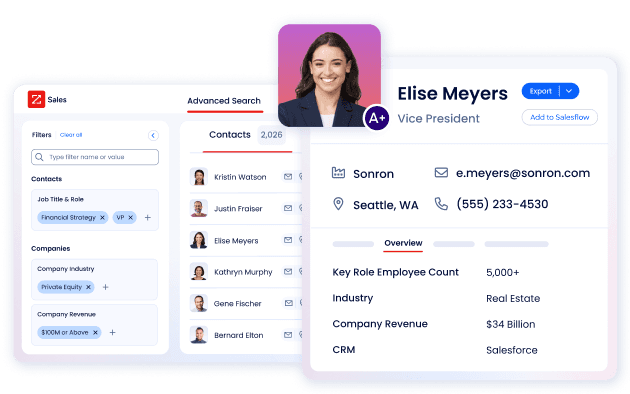
A huge B2B contact & company database
Detailed firmographics, org charts and technographics
Intent data, website visitor tracking, enrichment and RevOps tools
Pricing is quote-based. Third-party breakdowns put common bundles (Professional, Advanced, Elite) in the five-figure per-year ballpark, with add-ons for extra data, intent topics, and seats.
Pros
Deep coverage for North American and enterprise accounts
Strong intent and org structure data
Fits organizations with dedicated RevOps teams
Cons
Expensive if you're not using every bell and whistle (and most teams aren't)
You still need humans to stare at dashboards, design segments, and run campaigns
Paying for more "seats" so people can look at data feels very 2018 when you could pay for agents that do the actual work
Best for
Large, complex B2B orgs with serious RevOps muscle and a budget that doesn't flinch at five figures. If you're a 10-person startup Googling "cheaper ZoomInfo alternatives," this ain't it.
6. LinkedIn Sales Navigator – The Research Map
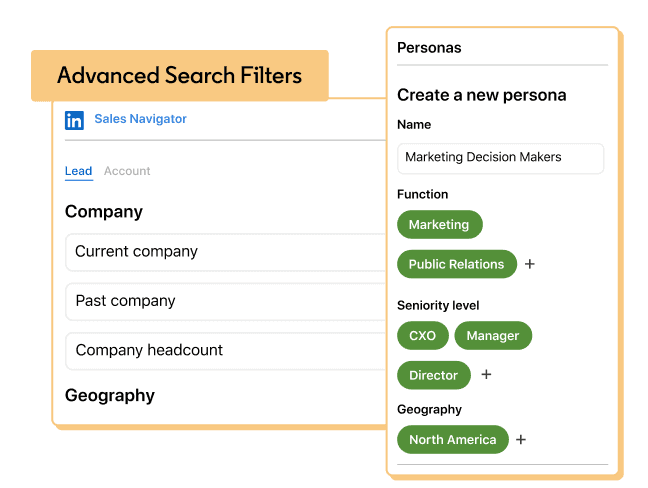
Sales Navigator is still the live map of the B2B world.
You get:
Advanced lead & account filters
Saved lists, alerts, and recommendations
AI features like Account IQ and Relationship Map (on higher tiers), plus integrations into CRMs and some outbound tools.
Pros
Up-to-date data because humans update their own profiles
Essential for account-based plays and understanding who sits where
Great starting point for defining your ICP and target accounts
Cons
It's a walled garden: exporting data is limited and often against terms
No built-in email verification, deliverability or sequencing
It's the map, not the car
Best for
Any B2B team, honestly. Sales Nav is basically mandatory - you just can't expect it to do anything beyond research. You still need other tools or agents to turn that research into actual pipeline.
7. Hunter.io – The Utility Knife
Hunter.io is the classic "find email address" + verification utility.
It gives you:
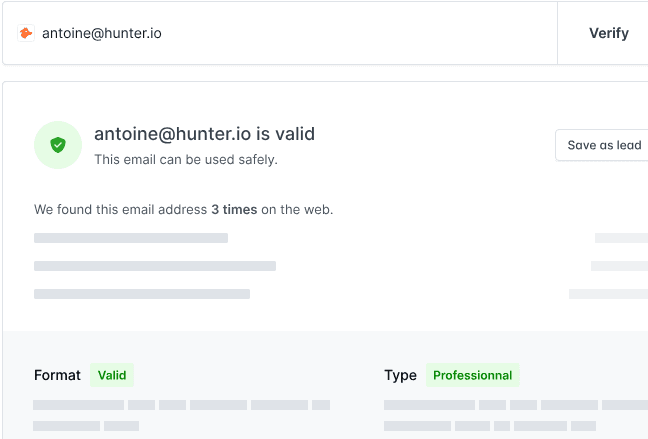
Domain Search – known emails for a given company
Email Finder – identify the likely email for a specific person
Email Verifier – check if an address is deliverable
Bulk operations & API, plus a Chrome extension
Pros
Perfect for cleaning or topping up small, curated lists
Helps protect your sender reputation by avoiding bad addresses
Affordable for teams who mainly need verification
Cons
Minimal context - you get addresses, not why you should email them now
Still requires a separate research and outreach engine
Easy to treat as "a way to scrape the internet" instead of a tool for carefully targeted outreach
Best for
Teams that already know exactly who they want to contact and just need a sharp, affordable tool to find and verify those addresses. (Not a system for figuring out who to reach or what to say.)
Feature comparison: Legacy Stack vs Agent Stack
Here's the 10,000-foot view:
Feature | Legacy B2B Stack (ZoomInfo, Apollo, Lusha, etc.) | Agent Stack (Sera) |
|---|---|---|
Primary product | Databases & tools | A small AI workforce |
Main output | Rows of data, dashboards | Booked meetings |
Operator | You / your SDRs / RevOps | 6 AI agents + Sera team |
List building | Manual filters, exports, credits | Autonomous List Building Agent tuned to your ICP |
Research | Google + LinkedIn tab‑hell | Research Analyst scans web, hiring, funding, news |
Deliverability | You read deliverability blogs | Deliverability Guard handles warm‑up & pacing |
Writing | Templates, spintax, AI one‑liners | Outreach Writer crafts 1‑to‑1 researched emails |
Risk in 2026 | Easy to oversend & trigger spam thresholds | Built to play nicely with new bulk‑sender rules |
Both approaches can work.
They just assume very different things about how much of your team's time you want to spend in the garden. 🌻
How to choose: keep tools or hire agents?
You don't need to rip out everything tomorrow. But you do need to be honest about where your bottleneck is.
Stick with the classic tools if...
You have great in-house operators who genuinely enjoy living in tools (they exist!)
You want fine-grained manual control over every single campaign decision
You're totally cool juggling: UpLead for data, Lusha for direct dials, ZoomInfo for intent, Apollo for sequences, Sales Nav for targeting, Hunter for verification... (you get the idea)
In that world, Sera can even sit next to your stack as a specialized, opinionated outbound lane that handles the stuff your team doesn't want to touch.
Move to an agent workforce if...
You're tired of comparing pricing pages for tools you'll still need to operate
Your outbound motion is bottlenecked by time and attention, not features
You're genuinely worried about deliverability under the new 2024–2025 inbox rules
You'd rather pay for a team that actually gardens your lead field than for more gardening tools to store in the shed
Think of Sera as:
"Everything you thought you were buying when you bought the tools - but actually staffed with AI agents and humans who run it for you."
Stop buying rakes, hire the gardening crew
UpLead, Lusha, ZoomInfo, Apollo, Sales Navigator and Hunter.io are all legitimately good tools.
They can absolutely help you find email addresses
They give you B2B business data that would've been impossible to get ten years ago
They're way, way better than nothing
But in 2026, tools are no longer the scarce resource.
Attention and trust are.
If you keep stacking tools, you'll keep stacking work:
Buying data (again)
Enriching it (again)
Verifying it (yep, again)
Writing sequences that don't sound like robots
Fixing deliverability issues at 11 PM
Trying not to drown in "activities per rep" slides that don't correlate with revenue
Sera exists for teams who are done with that. 🙃
Don't buy another tool.
Hire the crew. ✨
A crew of 6 AI agents plus the humans behind them that:
Builds the lists
Does the research
Protects your domains
Writes the emails
And focuses on the only thing your board actually cares about: the harvest - meetings and revenue.